Alert

By order of Sheriff Darren Weekly, Stage 2 Fire Restrictions are in place for unincorporated areas of Douglas County. Ordinance No. O-012-004 restricts open burning, the use of fireworks, portable fireplaces/fire pits and campfires in the unincorporated areas of Douglas County.

×

01.

Help Me With...

Select from list
My Residential Property
My Driver's License or Vehicle Registration
Requesting Assistance
Elections
Health Department

02.

Select from list
My Property Valuation
Understanding My Valuation
Paying My Property Tax
Neighborhood Sales
Building Permits
Vehicle Registration - New Stickers
Vehicle Registration - New Vehicle
Drivers License - New or Renew
New Resident Vehicle Registration
Adult Protection
Child Welfare
Child Support
Child Care
Financial Assistance
Medical Assistance
Food Assistance
Register to Vote / Update Voter Registration
Upcoming Election Information
Ballot Drop Box Locations
Voter Service and Polling Centers
Birth/Death Records
Restaurant Inspections
Community Health
Child Care Center Inspections
Septic System Inspections
Emergency Preparedness & Response
Disease Surveillance
Mental and Behavioral Health Education
Community Health and Clinical Services
Women, Infants and Children

03.

×
× Close
Wildfire Awareness

Mountain Pine Beetle

Summer Mountain Pine Beetle Updates:

Review our seasonal guide to learn more. 

About Mountain Pine Beetles

Douglas County’s forests are diverse—and like all forests, they naturally support insects and diseases. Most of the time, these forest pests exist at normal, balanced levels. But under certain conditions, populations can surge, leading to widespread damage across forested areas.

Mountain pine beetles (Dendroctonus ponderosae) are a natural part of forests across western North America. In healthy ecosystems, they actually play an important role—targeting weakened or dying trees and making space for new growth.

But when forests become overcrowded or stressed by drought and rising temperatures, beetle populations can spike dramatically. During these outbreaks, they can overwhelm even healthy trees, causing widespread forest loss.

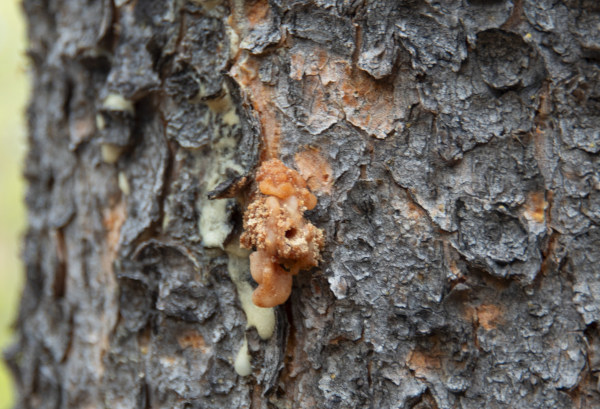
Beetle kill in Douglas County

Colorado’s most significant mountain pine beetle outbreak—from the late 1990s through 2013—reshaped forests across the state, and its impacts are still being felt today. While the hardest-hit areas were in higher-elevation lodgepole pine forests, the beetles eventually moved into ponderosa pine along the Front Range—including areas in and around Douglas County.

Recent aerial surveys by the U.S. Forest Service and Colorado State Forest Service show increasing mountain pine beetle activity in ponderosa pine forests along the Front Range, with visible pockets of tree mortality along key corridors like U.S. 285 and I-70—both of which connect to and influence forest conditions in Douglas County.

Locally, warmer temperatures and ongoing drought stress are weakening trees and creating favorable conditions for beetles to spread. These trends are expected to continue, making proactive forest management especially important for Douglas County residents.

Explore where aerial observers detected mountain pine beetle activity in Colorado’s forests over the past three years. This map shows data from an annual aerial survey conducted by the Colorado State Forest Service and U.S. Forest Service.

Beetle kill increases wildfire danger

Beyond forest health, beetle-killed trees pose real risks to our community. Dead and dying trees can increase hazards for firefighters, impact recreation areas, and threaten infrastructure like power lines and roadways. They can also influence wildfire behavior—potentially increasing intensity in certain conditions—which is a serious concern in Douglas County’s foothill communities where wildfire risk is already high.

Taking early action to reduce forest stress and manage beetle impacts is key to protecting our forests, watersheds, and the safety of our community.

Douglas County residents should check pine trees for signs of mountain pine beetle activity—especially in ponderosa, lodgepole, and limber pines. Beetles typically emerge and spread in late summer, and by fall, early signs of infestation are easier to spot while conditions are still mild enough to get outside and take a closer look.

Resident response depends on the stage of the Pine Beetle Lifecycle

Mountain pine beetles typically complete their life cycle in one year. Knowing when beetles are active can help you identify infestations and take action to protect nearby trees. Review our seasonal guide to learn more about beetle activity and related treatment. 

Treatment and Prevention

The Colorado State Forest Service maintains a list of known forestry contractors that have indicated an interest or capability to conduct forest management practices for mountain pine beetles on the central and northern Front Range.

View the list.


Removal of infested trees (October - May)

Removing infested trees—and properly disposing of wood from thinning or pruning—is one of the most effective ways to stop mountain pine beetles from spreading to nearby trees. In Douglas County, it’s especially important to stay ahead of the problem by also removing trees that are already stressed by other insects, disease, or overcrowding, since these are the ones beetles are most likely to target.

Residents should take infested wood and slash to a local transfer station, landfill, or approved wood drop-off site. You can also check for local businesses that accept or repurpose this material. Avoid transporting infested wood unless you’re taking it directly to one of these locations, as moving it elsewhere can unintentionally spread beetles to new areas.

The map on Colorado State Forest Service Webpage displays locations within nine counties along the Front Range accepting bark beetle-infested wood. Locations are delineated by small loads (pickups and trailers from residents) and large loads (semi-truck loads from contractors) and by private or municipality-owned facilities.

Solar treatments (October - April)

Solar treatments can be used to reduce mountain pine beetle populations in small, infested stands. These treatments involve felling infested trees, stacking cut logs off the ground in an area with full sun and covering them with clear plastic. The solar treatment of infested trees creates conditions unsuitable for the survival of the beetle’s larvae.

Trap trees (October - May)

Trap trees serve as traps for recently emerged, adult beetles. After the trap trees become infested with beetles, the trees are removed and destroyed, usually during the fall or winter while all of the beetles are still inside.

Preventative insecticide sprays (April - May)

The use of preventive insecticide sprays may prove effective in preventing mountain pine beetle infestation. Specific formulations of pyrethroids that are registered and tested for effectiveness are the primary preventive insecticidal sprays used to help reduce the likelihood of attacks on individual trees. The Colorado State Forest Service recommends spraying only high-value trees, such as those near homes, businesses or recreation sites. Follow the label of any chosen product.